8 hr
Pompeii & Vesuvius Full-Day Tour from Naples
Scale an active volcano, walk ancient Roman streets, and savor authentic Italian lunch on this dual-site adventure.
Reserve
Hand-picked by our editors — only the best 5 experiences from 47 reviewed.
Verified partners for every tour, free cancellation where available, and instant confirmation on every booking.
8 hr
Scale an active volcano, walk ancient Roman streets, and savor authentic Italian lunch on this dual-site adventure.
Reserve
7 hr 30 min
Explore the ash-preserved streets of ancient Pompeii, then hike to the smoking crater of the volcano that buried it.
Reserve
8 hr
Discover ancient Pompeii's ruins and hike an active volcano with priority entrance and expert guidance
ReservePrices from verified partners. Availability updates in real time at checkout. Free cancellation policies apply where shown.
The landmarks, rooms, and views travelers on this tour remember — all visible on a single visit.
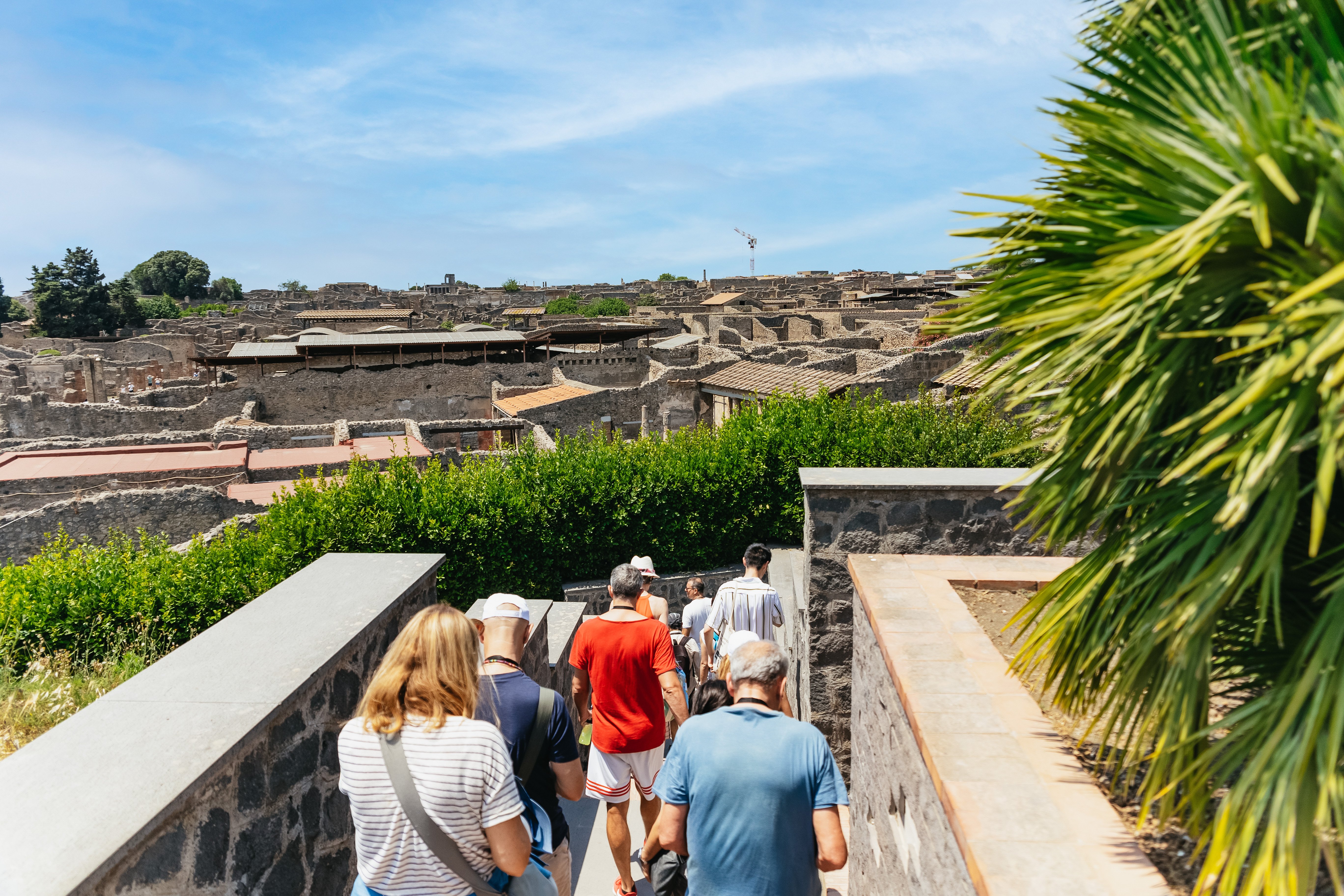
This central plaza served as the main hub for commerce and religion in the city. It is surrounded by the remains of important civic buildings and temples
Forum ruins Pompeii
Named after a bronze statue discovered here, this residence is a prime example of high-status Roman architecture. It covers an entire city block
House of the Faun Pompeii
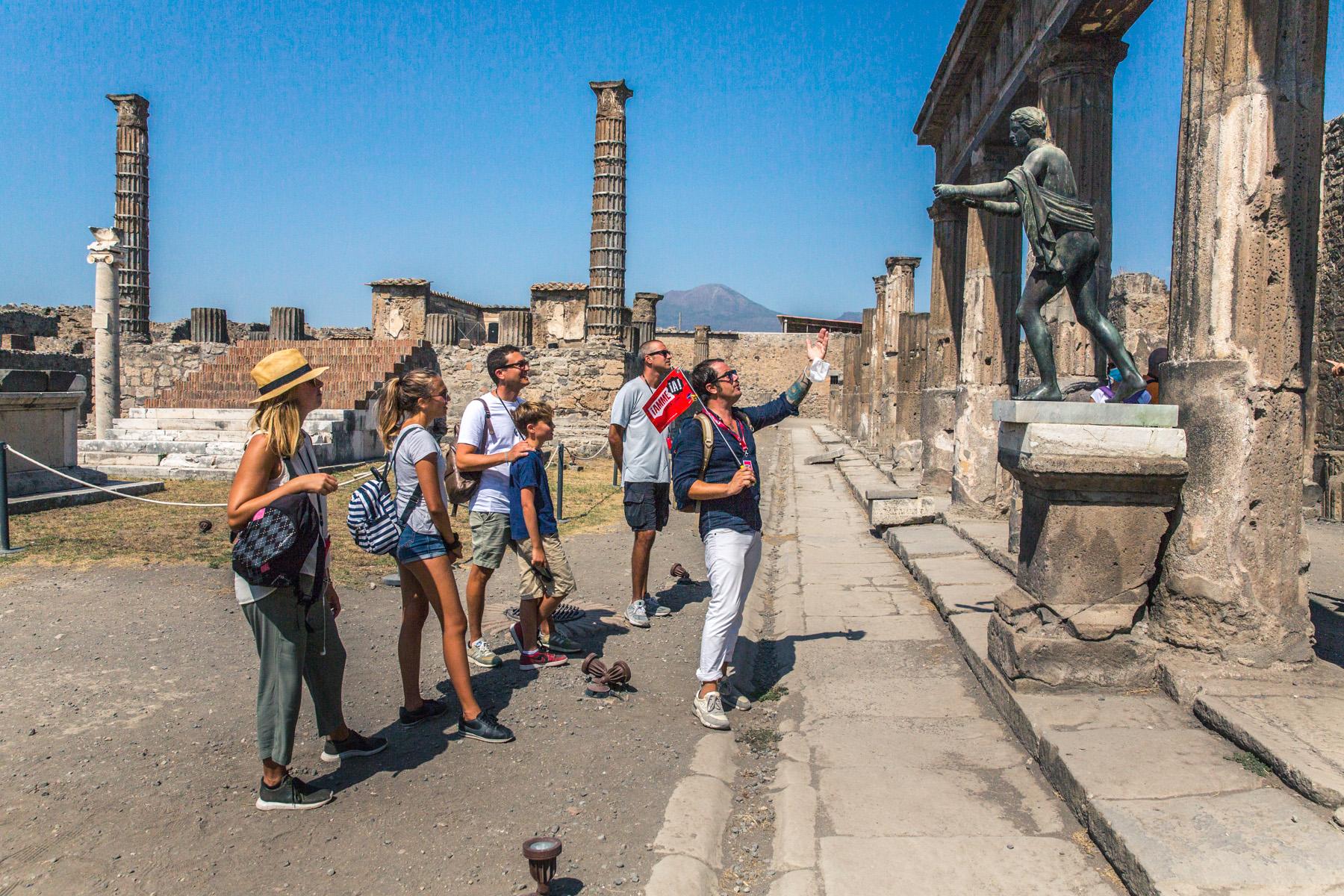
One of the oldest religious structures, this site features significant decorative elements. It highlights the city's complex religious history
Temple of Apollo Pompeii
Famous for its remarkably preserved wall paintings, this villa offers a window into private Roman cult practices. It sits just outside the city walls
Villa of the Mysteries Pompeii
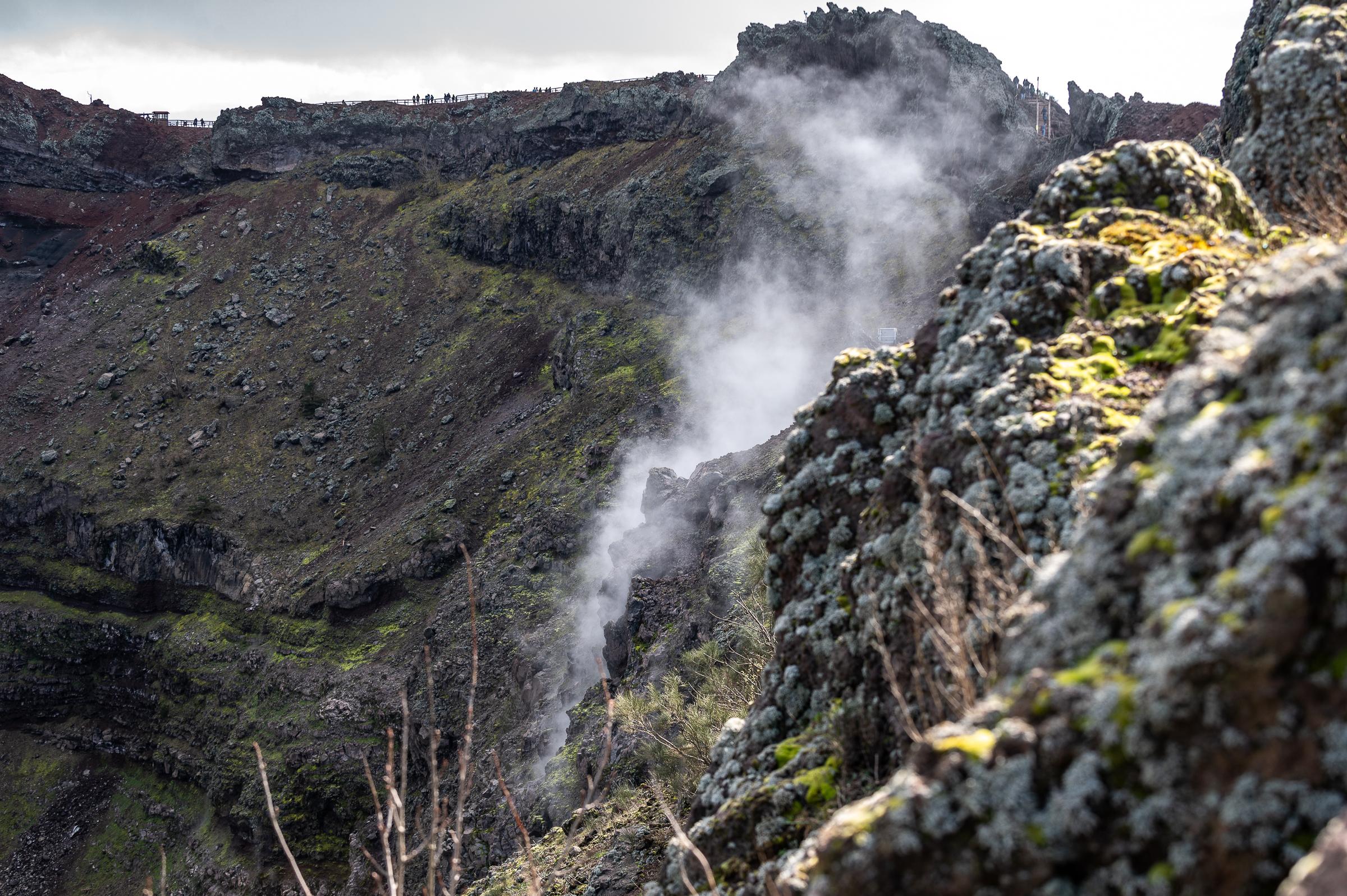
This active volcano is the reason for the preservation of the surrounding ancient sites. Visitors can observe the volcanic landscape and reach the summit rim
Mount Vesuvius summit crater
They complement each other; most visitors who do both call Herculaneum the more preserved site, while Pompeii provides the broader scale. Selecting the right city landmarks depends on whether you prioritize architectural detail or urban expanse for your pompeii herculaneum vesuvius tour from naples tickets.
| Feature | Top pick Pompeii Archaeological Park | Herculaneum Archaeological Park |
|---|---|---|
Preservation Quality |
Structures and frescoes | Exquisite organic material and timber |
Site Size |
Expansive city layout | Compact residential area |
Walking Intensity |
High due to scale | Moderate navigation |
Time Required |
3–5 hours | 1.5–3 hours |
Atmosphere |
Wide-reaching historical immersion | Intimate and detailed view |
| See tickets → |
Verdict: Choose Pompeii if you want to explore the massive footprint of a Roman city on your pompeii herculaneum vesuvius tour from naples tour, or select Herculaneum for a closer, more intense look at ancient daily life typical of pompeii herculaneum vesuvius tour from naples tours.
Choose your ticket, select your date, and reserve in under two minutes. Secure checkout handled by our verified partner.
Instant confirmation by email, with a mobile voucher you can save offline. No printing, no queuing at a collection desk.
Arrive at the entrance, show your voucher on your phone, and walk in. Most tickets include priority or skip-the-line access.
Practical details for your visit straight from our verified partners — hours, access, rules, and how to get there.
Piazza Garibaldi
Main transport hub for group pick-ups
Use the Circumvesuviana train line from Naples Porta Nolana to Pompeii Scavi.
Follow the A3 Napoli-Salerno motorway towards the Pompei Ovest exit.
Wear comfortable walking shoes with good grip for uneven ancient stone streets. Modest clothing is recommended, particularly for areas near historic sanctuaries.
Backpacks and large bags exceeding 30x30x15 cm must be deposited in the complimentary cloakroom. Security staff may conduct bag inspections at the entrance.
Personal photography is permitted throughout the site for non-commercial use. Tripods and professional lighting equipment require prior authorization from the park administration.
The Pompeii for All path offers a designated accessible route for visitors with mobility issues. Some sectors remain difficult to navigate due to original cobblestones.
Mobile phones may be used, but visitors are expected to maintain silence inside historical structures. Charging stations are not provided on-site.
Strollers are permitted but can be difficult to maneuver on original Roman paving. Baby changing facilities are located near the main entrance restrooms.
Picnicking is restricted to designated areas within the park. A cafeteria is located inside the Archaeological Park near the Forum for refreshments.
Only small pets carried in appropriate carriers or certified service animals are allowed. Large pets must remain outside the park boundaries.
The pompeii herculaneum vesuvius tour from naples provides an immersive look at Roman life. Visitors should prepare for significant sun exposure during summer months.
Best time to go, insider tips, nearby landmarks, and the cancellation fine print — flip through to skim what matters to you.
How crowds, weather, and events shift across the year.
Mild temperatures and moderate visitor numbers make this ideal for walking tours.
Expect high temperatures and peak tourist crowds; early arrivals are essential.
Comfortable weather returns, perfect for visiting both volcanic and archaeological sites.
Cooler and quieter, offering a more peaceful experience throughout the park.
Small details that turn a good visit into a great one.
Reach the site at 09:00 to beat the heat and crowds.
Wear sturdy, closed-toe shoes to handle the uneven lava stone streets.
Bring high-factor sunscreen and a hat, as shade is extremely limited inside the ruins.
Download a digital map before entry to navigate the sprawling residential sectors efficiently.
Utilize the public fountains located throughout the site to stay hydrated.
Book a pompeii herculaneum vesuvius tour from naples to maximize your historical understanding.
Non-bookable sights within a short walk — free to visit, easy to pair.
Features intricate frescoes depicting ancient rituals. This site is situated on the outskirts of the main city center.
A significant religious site bordering the Forum. It showcases distinct Roman and Greek architectural influences.
One of the largest and most luxurious private residences in the city. It is named for the bronze statue found in its garden.
The center of political, religious, and economic life in ancient times. It remains the most important public space in the city.
Flexible, no hidden fees.
Full refunds are available for most tours if cancelled at least 24 hours prior to the scheduled departure. The 20 EUR entrance fee per person is subject to park policy terms.
Hand-picked options within walking distance — pick a district for vibe, or a specific hotel for convenience.
Numerous hotels located within easy walking distance of the ruins.
Offers proximity to transit links for daily excursions.
Quiet residential options near the smaller archaeological site.
Herculaneum was discovered by accident in 1709 when a well-digger struck marble pavement eight metres below a Neapolitan vineyard. What emerged over the next three centuries reshaped how scholars understood Roman domestic life. Unlike Pompeii, buried under porous lapilli, Herculaneum lay sealed beneath a pyroclastic surge that carbonised wood, preserved two-storey houses, and left intact the upper floors that crumbled elsewhere. The volcanic mud hardened into rock. Excavators found wooden beds, wax tablets still legible, and loaves of bread on shelves. In the 1980s, archaeologists uncovered more than three hundred skeletons huddled in the boat sheds along the ancient shoreline, evidence that many residents fled toward the sea and died waiting for rescue that never came. Pompeii, by contrast, had been looted intermittently since the sixteenth century, its location half-remembered through garbled references in Pliny the Younger's letters. Systematic excavation began in 1748 under Charles III of Spain. By 1763, an inscription confirmed the site's identity. Today the Pompeii Archaeological Park spans sixty-six hectares, with roughly one-third still unexcavated. The Forum, the amphitheatre, the lupanare with its frescoed alcoves, and the Villa of the Mysteries remain among the most visited Roman ruins on earth. New findings continue: a thermopolium with intact food residues was unveiled in 2020, and a ceremonial chariot emerged from the Villa of Civita Giuliana in 2021. The site receives more than three million visitors each year. Mount Vesuvius has erupted more than fifty times since 79 CE, most recently in March 1944, when lava flows destroyed the villages of San Sebastiano al Vesuvio and Massa di Somma. The current cone, rising 1,281 metres above the Bay of Naples, is monitored by the Osservatorio Vesuviano, the world's oldest volcanological observatory, founded in 1841. The summit trail, opened to the public in 1995 after decades of restricted access, winds 900 metres to the crater rim. On clear days the view extends across the Sorrentine Peninsula to Capri. Volcanologists classify Vesuvius as one of the most dangerous volcanoes in the world due to the density of settlement in the red zone, a seven-kilometre radius where more than 600,000 people live. The last major Plinian eruption, comparable in scale to the event that buried Pompeii and Herculaneum, occurred in 1631 and killed an estimated 4,000 people. A Pompeii herculaneum vesuvius tour from naples combines all three sites into a single itinerary, typically departing Naples by coach and covering eighty kilometres round-trip. Most excursions allocate two to three hours at Pompeii, ninety minutes at Herculaneum, and sixty minutes at the crater. Archaeologist-led options provide specialist commentary on stratigraphy, fresco techniques, and the sequence of the eruption. Standard admission to the Pompeii Archaeological Park costs 20 EUR per person. Group departures streamline logistics, bundling transport, entrance fees, and guide services into one reservation.
"Herculaneum lay sealed beneath a pyroclastic surge that carbonised wood, preserved two-storey houses, and left intact the upper floors that crumbled elsewhere."
A step-by-step walkthrough of the visit — what you'll see, how long each stage takes, and the details that matter.
You meet your group outside Naples Centrale at nine in the morning. The coach cuts south along the A3, past industrial suburbs and into the shadow of Vesuvius. Forty minutes later you step onto the basalt paving of Pompeii's Via dell'Abbondanza. Your guide stops at the thermopolium on the corner of Vicolo delle Nozze d'Argento and points to the embedded dolia, terracotta jars that once held wine and grain. You walk through the House of the Faun, its atrium open to the sky, then cross the Forum and stand beneath the arch that frames the volcano. By early afternoon you are at Herculaneum, a smaller site but deeper and quieter. Wooden balconies jut from brick façades. You descend into the boat sheds, low vaulted chambers where the skeletons were found. The air is cool and smells of damp stone. Back at street level you pass the Samnite House, the baths, the mosaic of Neptune and Amphitrite still bright behind glass. The final ascent begins at the Vesuvius car park, elevation 1,000 metres. You hike the switchback trail to the crater rim in twenty minutes. The summit is bare, grey scree and fumaroles venting sulphur. You look down into the caldera, 200 metres deep and silent, and across the bay to the sites you walked that morning, locked in ash for seventeen centuries.
The Pompeii Archaeological Park is open daily from 09:00–19:00. These hours apply regardless of the specific day of the week.
The best arrival window is 09:00–10:30 to avoid peak heat and large tour groups at Pompeii Archaeological Park.
Large bags must be stored in the cloakroom; smaller personal items are permitted. Security may inspect bags at the entrance.
Wear comfortable walking shoes and modest clothing. The terrain consists of ancient, uneven stone streets.
Certain areas are accessible via the Pompeii for All route. Be aware that most of the ancient city features original stone paving.
Yes, personal photography is permitted. Professional equipment requires prior approval from the park office.
A cafeteria is located inside the park near the Forum. Picnicking is only allowed in designated areas.
You can arrive via the Circumvesuviana train line from Naples to the Pompeii Scavi station. Parking is also available near Via Plinio.
Most tours offer full refunds if cancelled at least 24 hours in advance. Always check your specific booking confirmation.